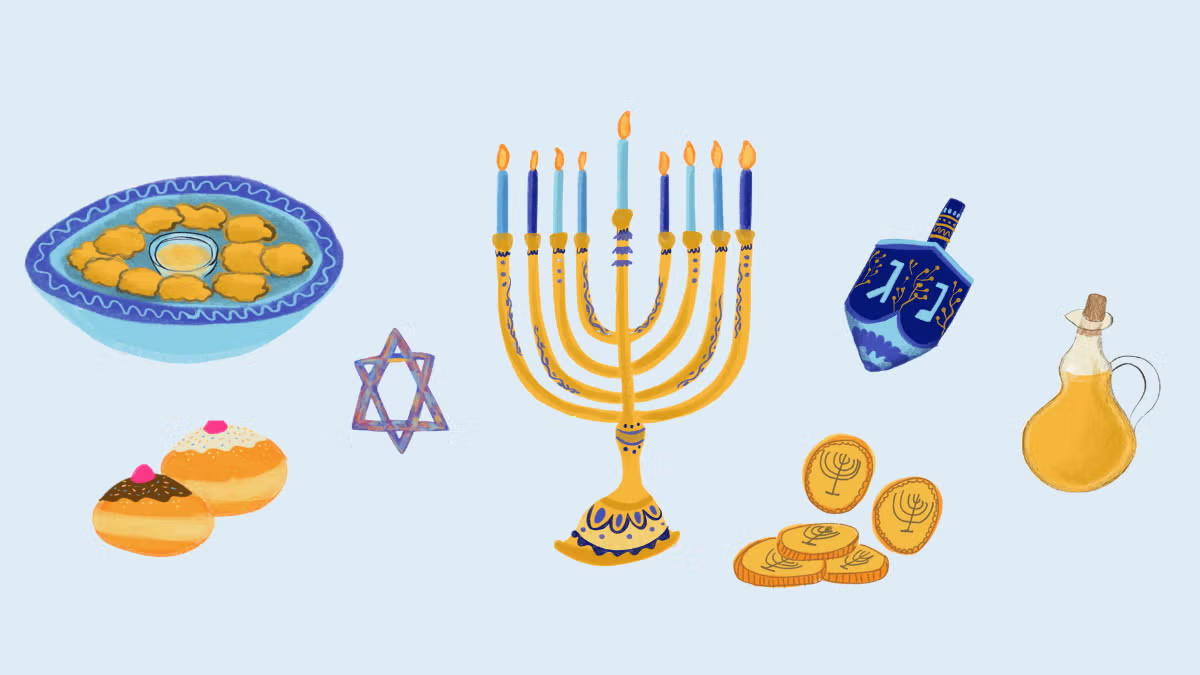
When examining the biblical calendar, December already carried religious significance long before later traditions assigned it as the birthdate of Jesus. Scripture identifies this time of year with the Feast of Dedication, also known as Hanukkah, a winter festival commemorating the rededication of the Temple. This existing observance makes it unlikely that Jesus’ birth occurred in December, especially since the Bible consistently connects His arrival with themes and seasons associated with God’s appointed times rather than later-added traditions.
The Feast of Dedication is directly mentioned in the New Testament. John records, “And it was at Jerusalem the feast of the dedication, and it was winter” (John 10:22). This verse clearly places the Feast of Dedication in winter, aligning it with the time frame we now associate with December. During this feast, Jewish life in Jerusalem was already centered on remembrance, worship, and national history tied to the Maccabean revolt and the cleansing of the Temple. It was not a feast commanded in the Law of Moses, but it was widely observed and firmly fixed in the winter season.
Jesus Himself was present in Jerusalem during this feast. John continues, “And Jesus walked in the temple in Solomon’s porch” (John 10:23). This shows that December already had a defined religious focus during Jesus’ lifetime. If Jesus had been born during this same period, Scripture would almost certainly connect His birth to this feast or at least acknowledge the overlap. Yet the Gospels are completely silent about any winter feast surrounding His birth.
The Feast of Dedication commemorated the restoration of the Temple after it had been defiled. Candles and light became central symbols, representing the rekindling of God’s presence in the sanctuary. While Jesus would later declare, “I am the light of the world” (John 8:12), Scripture never links this declaration or His birth to the Feast of Dedication. Instead, His birth narrative is free of winter festival language and imagery, reinforcing that His arrival did not coincide with this winter observance.
Biblically, God had already established His appointed feasts in Leviticus 23, all of which occur in spring and fall, not winter. These feasts were called “the feasts of the LORD” and were tied to prophetic fulfillment and divine timing. The Feast of Dedication, while meaningful historically, was not among these commanded appointments. Jesus fulfilled God’s appointed times precisely in His death and resurrection, which strongly suggests that His birth would also align with God’s established feast pattern rather than an uncommanded winter festival.
December being occupied by the Feast of Dedication also explains why it lacks any biblical emphasis on Messiah’s birth. The winter season was already associated with remembrance of past deliverance, not the inauguration of new covenant fulfillment. Scripture instead emphasizes joy, peace, divine dwelling, and proclamation at Jesus’ birth—themes that align far more closely with the fall feasts than with Hanukkah.
The Bible never associates Jesus’ birth with winter worship, candle lighting, or temple rededication. Instead, it presents His birth as a quiet yet profound fulfillment of prophecy, occurring in a season that allowed travel, shepherds in the fields, and public movement. December, already marked by the Feast of Dedication and winter conditions, does not fit the biblical context surrounding the nativity.
When Scripture is allowed to speak for itself, December stands revealed not as the season of Jesus’ birth but as a time already set apart for a different purpose. The existence of the Feast of Dedication in winter further supports the conclusion that December 25th is a later tradition, not a biblically grounded date for the birth of Christ.